
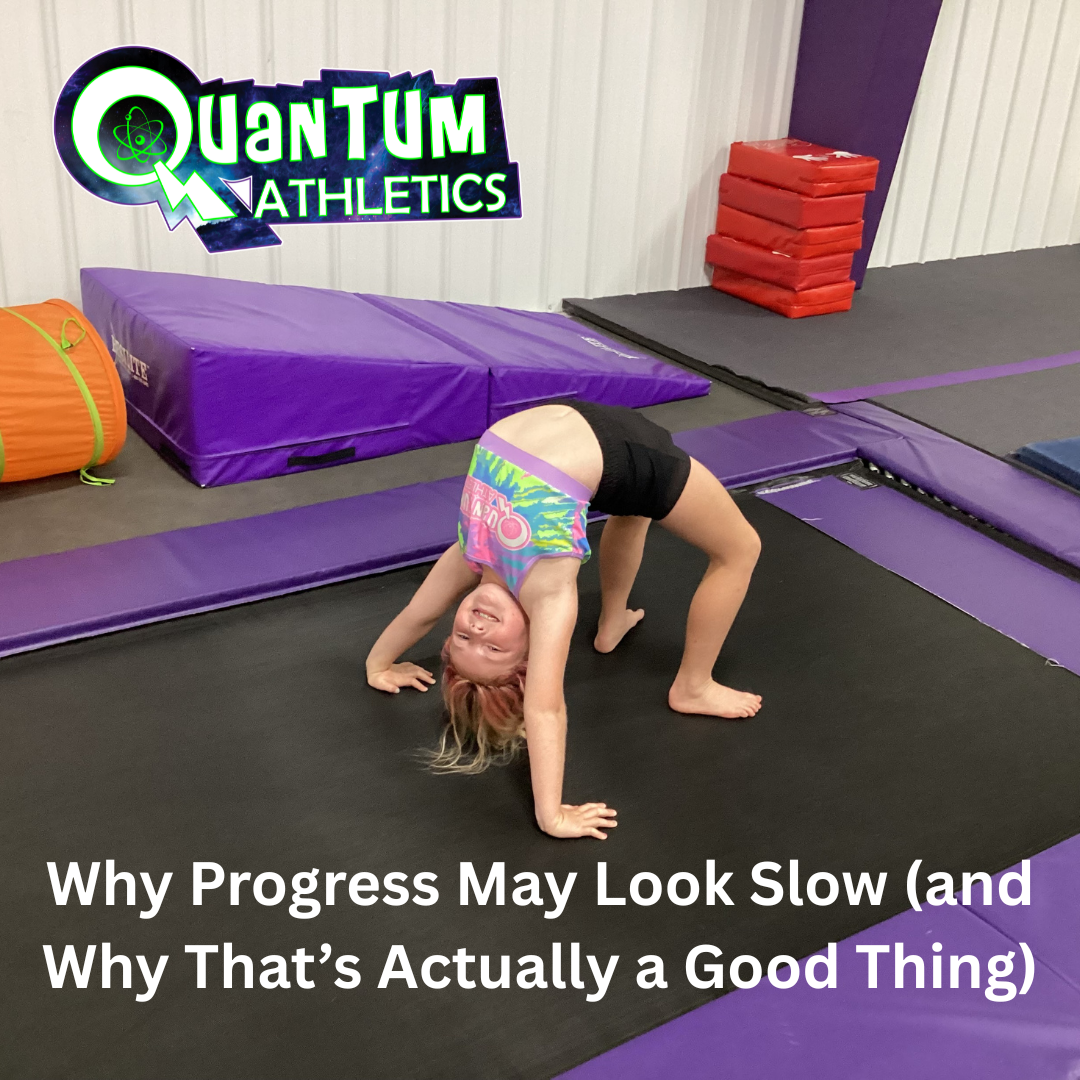
Why Progress May Look Slow (and Why That’s Actually a Good Thing)
As a parent watching your child tumble, it’s natural to get excited about their progress—and sometimes, to feel concerned if things don’t seem to be moving quickly. Maybe they’ve been working on a cartwheel for weeks, or they’re repeating the same drills over and over. It may look like progress is slow. But here’s the secret: that’s not just normal, it’s actually a really good thing.
1. Skills Build Like Building Blocks
Every tumbling skill depends on a foundation of smaller, safer skills. For example, a strong handstand helps create a better round-off, which eventually leads to powerful back handsprings. Coaches slow things down on purpose so athletes build the right strength, body awareness, and technique. Without these building blocks, skills can become sloppy—or even unsafe.
2. Repetition Creates Muscle Memory
When you see your child practicing the same drill again and again, it’s not because they’re stuck. It’s because their coach is helping their body remember the movement. This repetition builds consistency, so when athletes add new skills, they perform them with control and confidence instead of guesswork.
3. Confidence Grows With Time
Tumbling isn’t just physical—it’s mental. Fear is common, especially as athletes flip and rotate in new ways. Slow, steady progress helps children gain confidence in a safe environment. When kids feel confident, they learn to push past fear and approach new skills with courage instead of hesitation.
4. Preventing Injuries and Bad Habits
Rushing into big skills before an athlete is ready can cause injuries or engrain poor technique that’s hard to unlearn later. By allowing progress to feel gradual, coaches protect athletes’ bodies and ensure their skills develop the right way.
5. The Payoff: Strong, Long-Term Success
It might feel slow in the moment, but the athletes who take their time learning the right way are the ones who build lasting success. They gain strong fundamentals, clean technique, and confidence that will carry them into more advanced skills down the road.
Final Thoughts for Parents
If your child’s progress seems slow, know this: it’s not a sign of struggle—it’s a sign that their coach is teaching them with care and purpose. Every drill, every repetition, every “small” improvement is laying the foundation for bigger skills in the future.
✨ Slow and steady progress is the best kind of progress. It creates confident, safe, and successful tumblers who are ready to shine for years to come.
