
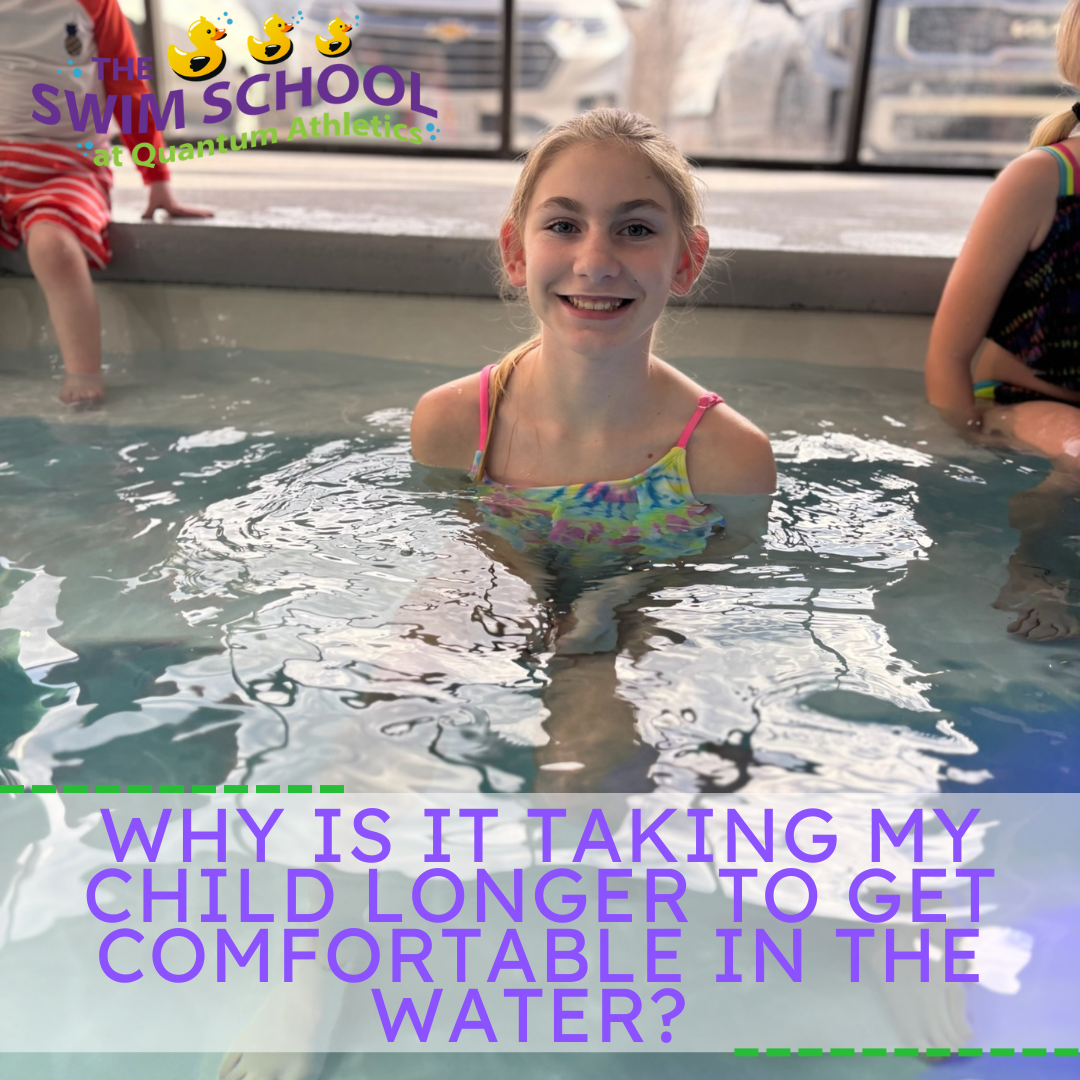
Why Is It Taking My Child Longer to Get Comfortable in the Water?
By Samantha, Owner of The Swim School at Quantum
First — Let’s Clear This Up: This Is Completely Normal
One of the most common questions parents ask during swimming lessons is:
“Why does it seem like my child is taking longer to get comfortable in the water than other kids?”
If you’ve found yourself wondering this, take a deep breath — your child is not behind, and nothing is “wrong.”
At The Swim School at Quantum, we work with lots of children across Lockwood, Stockton, Greenfield, Lamar, and nearby communities, and one thing is always true:
👉 Every child warms up to water at their own pace.
Swimming requires trust, body awareness, breath control, and emotional readiness — and those things develop differently for every child.
Why Some Children Take Longer to Feel Comfortable
There are many reasons a child may need more time to feel confident in the water, and none of them mean they won’t become a strong swimmer.
1. Temperament and Personality
Some children jump right in.
Others observe, think, and need time to process.
Cautious or thoughtful children often:
-
Take longer to trust new environments
-
Prefer predictability
-
Need more repetition before relaxing
These children often become excellent swimmers once they feel safe — they just need patience.
2. Sensory Sensitivities
Water introduces new sensations:
-
Water on the face
-
Water in the ears
-
Echoes and splashes
-
Temperature changes
-
Movement without solid ground
For some kids, this sensory input takes time to adjust to. Comfort grows gradually — and forcing it can slow progress rather than help it.
3. Limited Prior Water Exposure
Not every child has spent time in pools, bathtubs, or lakes.
Children with less water exposure may:
-
Be unsure how their body will feel
-
Need more time to trust floating
-
Take longer to relax their muscles
This is exactly why indoor swimming lessons are so beneficial — they provide consistent, calm exposure in a controlled environment.
4. Fear Is a Protective Response
Fear isn’t bad — it’s a child’s way of keeping themselves safe.
In swimming lessons, we don’t eliminate fear by pushing through it.
We reduce fear by:
-
Building trust
-
Repeating skills gently
-
Celebrating small wins
-
Allowing children to feel in control
When fear fades, confidence takes its place.
5. Comparison Can Be Misleading
It’s easy to compare kids in group lessons — but appearances can be deceiving.
Some children may:
-
Look confident but rely heavily on instructors
-
Move quickly but lack foundational safety skills
-
Perform skills without true comfort or control
At The Swim School at Quantum, we focus on true comfort and safety, not rushing progress.
Why Taking Longer Can Actually Be a Good Thing
Children who take longer to warm up often:
-
Develop stronger floating skills
-
Build better breath control
-
Learn to stay calm under stress
-
Retain skills more deeply
-
Become more independent swimmers long-term
Comfort can’t be rushed — but when it’s solid, everything else becomes easier.
How We Support Water Comfort in Our Swim Lessons
Our approach is gentle, intentional, and child-centered.
We focus on:
✔ Trust-building before skill-building
✔ Floating before forward swimming
✔ Breath control before speed
✔ Roll-to-back safety skills
✔ Celebrating effort, not forcing progress
Comfort is the foundation of all strong swimming.
How Parents Can Help at Home (Without Pressure)
You play a huge role in your child’s water confidence — and the good news is, it doesn’t require a pool.
Here are simple, effective ways to help at home:
1. Make the Bathtub a Practice Zone
Bathtubs are perfect for low-pressure water exposure.
Try:
-
Pouring water gently over arms and shoulders
-
Blowing bubbles in the water
-
Letting water touch the face briefly
-
Practicing holding breath for 1–2 seconds
-
Letting your child control when water goes on their face
Keep it playful and short.
2. Practice Face-In Water Comfort
Comfort with water on the face is one of the biggest hurdles.
At home:
-
Count to three before splashing water on the face
-
Let your child splash you first
-
Use phrases like “blink and breathe” or “blow bubbles”
-
Celebrate even tiny attempts
3. Avoid Saying “It’s Okay” Too Quickly
When kids hear “It’s okay,” they sometimes think something isn’t okay.
Instead, try:
-
“You’re safe.”
-
“I’m right here.”
-
“You’re doing something new.”
-
“Take your time.”
These phrases build confidence without pressure.
4. Talk Positively About Swim Lessons
Your child picks up on your emotions.
Try saying:
-
“Swimming is something we learn little by little.”
-
“Your job is just to try.”
-
“It’s okay to take your time.”
-
“I’m proud of how brave you are.”
Avoid asking, “Did you do it yet?”
Focus on effort, not outcomes.
5. Celebrate Small Wins
Comfort grows through small victories:
-
One second of floating
-
One calm breath
-
One face dip
-
One relaxed moment
These are BIG steps — celebrate them!
What Progress Often Looks Like
Comfort rarely happens all at once.
More often, it looks like:
-
Hesitation → curiosity
-
Curiosity → participation
-
Participation → confidence
-
Confidence → independence
Each phase is important.
Final Thoughts: Trust the Timeline
If your child is taking longer to feel comfortable in the water, that doesn’t mean they won’t succeed — it means they’re learning in a way that’s right for them.
At The Swim School at Quantum, we believe:
✨ Comfort comes before confidence
✨ Confidence comes before skill
✨ And skill comes with time
With patience, consistency, and support — both in lessons and at home — your child will get there.
And when they do, they’ll be stronger, calmer, and safer swimmers for life.
