
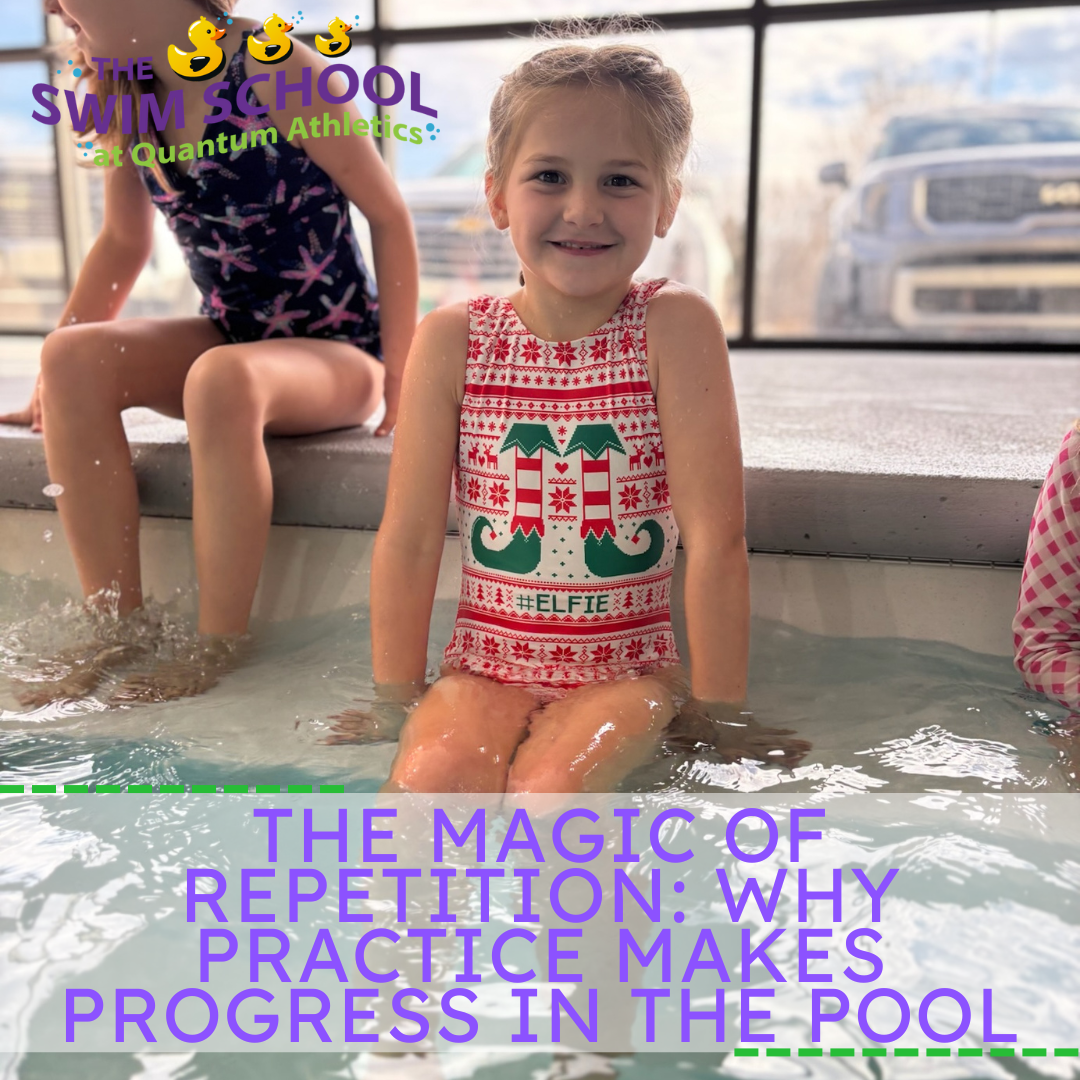
The Magic of Repetition: Why Practice Makes Progress in the Pool
In swimming, progress rarely comes from a single breakthrough moment. Instead, it’s built quietly—practice by practice. Repetition may not sound exciting, but in the pool, it’s where the real magic happens.
Why Repetition Matters in Swimming
Swimming is a highly technical sport. Every stroke involves precise timing, body position, breath control, and coordination. Unlike many land-based activities, swimmers can’t rely on gravity or solid ground to help them move. That’s why repetition is essential—it helps the body learn how to move efficiently through water.
Each time a swimmer repeats a skill, their brain strengthens the neural pathways connected to that movement. Over time, what once felt awkward becomes automatic. This is how good technique turns into great habits.
Building Muscle Memory (Without Even Thinking About It)
You’ve probably heard coaches say, “Practice doesn’t make perfect—perfect practice makes perfect.” While perfection isn’t realistic, intentional repetition builds muscle memory. Muscle memory allows swimmers to perform skills correctly even when they’re tired, scared or distracted.
For young or developing swimmers, this is especially important. The more often they repeat proper movements, the less they have to think about how to swim—and the more they can focus on confidence, endurance, and fun.
Confidence Grows with Consistency
Repetition doesn’t just train the body; it trains the mind. When swimmers practice skills regularly, they gain confidence in their abilities. A child who has practiced floating dozens of times begins to trust the water. A swimmer who has repeated a breathing pattern over and over stops panicking when their face goes in.
Confidence in the pool comes from knowing, “I’ve done this before—and I can do it again.”
Progress Isn’t Always Immediate (And That’s Okay)
One of the hardest lessons for swimmers and parents alike is understanding that progress isn’t always visible right away. A swimmer may practice the same skill for weeks or months before it suddenly “clicks.” That doesn’t mean the earlier practices didn’t matter—those repetitions were laying the foundation.
In swimming, improvement often happens below the surface before it shows up above it.
Repetition Looks Different at Every Level
-
Beginner swimmers repeat basic skills like blowing bubbles, floating, and kicking to build water comfort and safety.
-
More advanced swimmers spend lots of time on their back to get more comfortable floating.
No matter the level, repetition remains a constant part of growth.
Turning Practice into Progress
The key to meaningful repetition is quality. Focused practice with clear goals—supported by encouragement and feedback—turns repetition into progress. This is why consistent attendance matters and why sticking with the process pays off over time.
Every drill, every practice counts.
Trust the Process
Swimming teaches patience, discipline, and resilience. When swimmers learn that repetition leads to progress, they gain a powerful life lesson that extends far beyond the pool.
So the next time practice feels repetitive, remember: that’s where the magic is happening. 🏊♀️✨
