
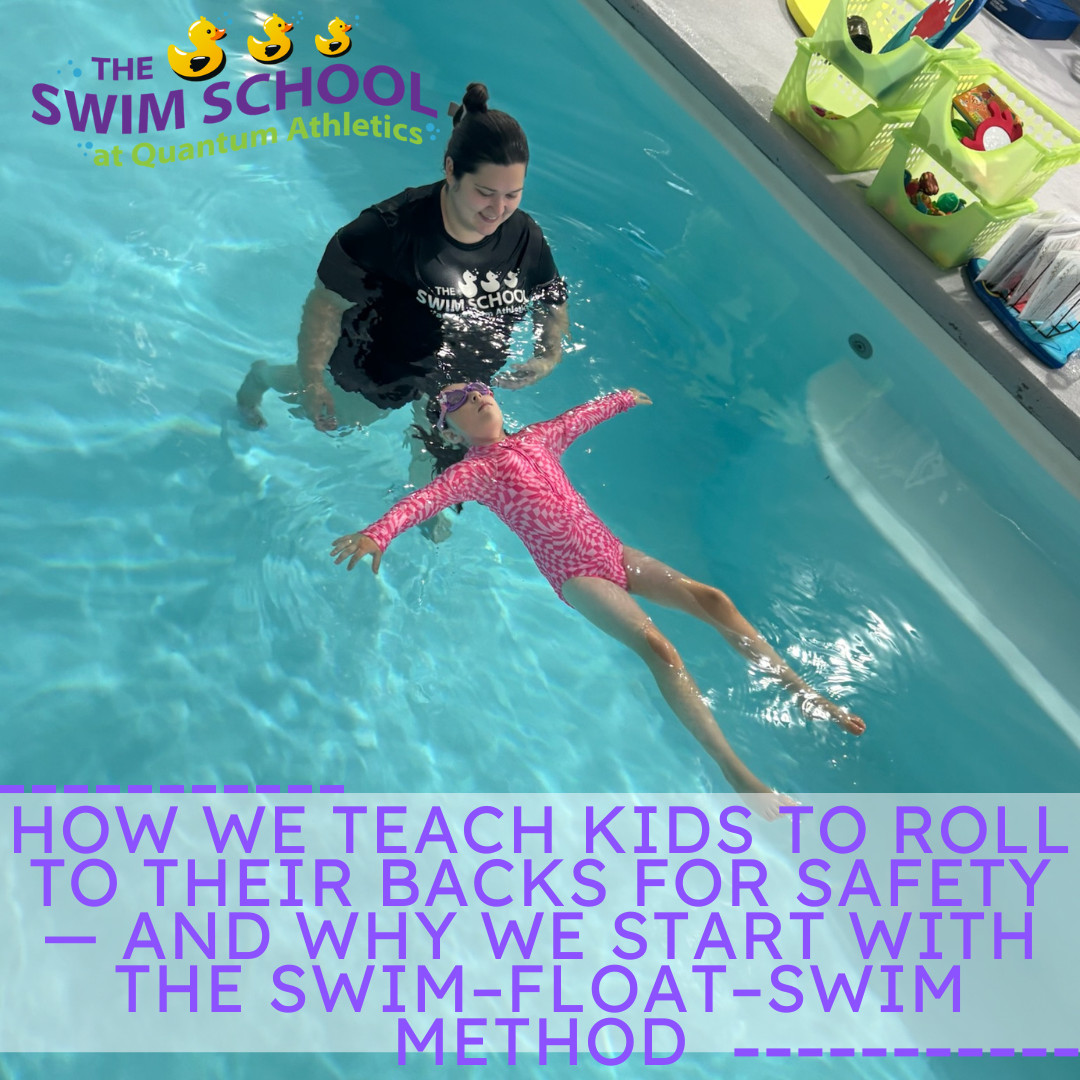
How We Teach Kids to Roll to Their Backs for Safety — And Why We Start With the Swim–Float–Swim Method
By Samantha, Owner of The Swim School at Quantum
Rolling to the Back: One of the Most Important Water Safety Skills
At The Swim School at Quantum, one of the first things your child will learn — long before traditional “swimming” — is how to roll to their back and float safely.
This isn’t just part of a curriculum.
It’s a life-saving skill and the foundation of the swim–float–swim method we use in our survival swim lessons and beginner swimming classes across the Lockwood, Stockton, Greenfield, and Lamar area.
Rolling to the back allows a child to:
🌟 Breathe
🌟 Rest
🌟 Stay calm
🌟 Recover from submersion
🌟 Prepare to continue swimming
Before children learn to swim forward confidently, they learn what keeps them alive in unexpected situations.
Why Rolling to the Back Is Essential for Water Safety
Many parents assume that teaching kids to “swim to the wall” is enough.
But in real situations, children may:
-
Fall into water unexpectedly
-
Lose their balance
-
Get tired quickly
-
Take in water
-
Panic or forget what to do
A child who only knows how to swim forward may not know how to recover safely.
But a child who can roll to their back knows how to:
✔ Pause
✔ Breathe
✔ Relax
✔ Reorient
✔ Reset for the next movement
It turns an emergency moment into a manageable one.
The Swim–Float–Swim Method: What It Is and Why It Works
The swim–float–swim method is widely considered the safest and most effective progression for young swimmers, especially toddlers and beginners.
Here’s what it teaches:
1. Swim
The child swims forward using their arms and legs — even if it’s not a perfect stroke. Any forward progress is good progress.
2. Float
When they get tired or need air, the child rolls onto their back and floats.
This gives them:
-
Time to breathe
-
Time to rest
-
Time to calm their body
3. Swim again
Once they’re rested, they roll back over to continue swimming toward safety.
This pattern is natural, repeatable, and works even under stress.
Why We Teach Roll-to-Back Before Anything Else
Parents sometimes ask:
“Why are we practicing floating and rolling so much? When do they start swimming?”
The answer: Rolling and floating ARE swimming — the safe kind.
Forward strokes will come, but safety comes first.
Here’s why we teach rolling early:
⭐ It Teaches Breath Control
Kids learn when to stop swimming and when to breathe.
Floating gives them a calm way to regulate their breathing underwater.
⭐ It Teaches Body Awareness
Rolling to the back requires coordinated movement between:
-
Head
-
Torso
-
Hips
-
Arms
-
Legs
This builds strong motor patterns that make future swimming skills easier.
⭐ It Builds Water Confidence
When kids realize they can breathe whenever they want by rolling over, their fear decreases.
Confidence rises.
Skills improve faster.
⭐ It Prevents Panic
In surprising situations, the roll-to-back response becomes instinctive.
Instead of panicking, kids choose to breathe.
This alone has saved countless lives.
How We Teach Rolling to the Back in Our Lessons
Our progressions are gentle, child-centered, and based on each swimmer’s comfort and skill.
Here’s our approach at The Swim School at Quantum:
1. Comfort With Back Floating
Kids learn to float on their back with support.
We help them:
-
Relax
-
Keep their eyes up
-
Trust the water
-
Find their balance
This step alone transforms fearful swimmers into confident ones.
2. Assisted Rollovers
Next, kids learn how to move from front to back.
We guide their bodies gently so they feel how to:
-
Lead with their head
-
Rotate with their core
-
Let their hips follow
-
Settle onto the water
3. Independent Rolls
Once the motion is understood, we let them try it with less help.
Mistakes are normal — and part of the learning process.
4. Rolling After Submersion
After falling in or going underwater, kids practice rolling immediately to breathe.
5. Rolling While Swimming Forward
Finally, kids learn to:
Swim → Roll → Float → Swim
This creates automatic survival sequencing.
All of this happens gently, positively, and at the child’s own pace — in our warm, indoor pool environment.
Why Indoor Swimming Lessons Improve Roll-to-Back Skills
Your warm, indoor pool gives kids the perfect environment to learn floating and rolling.
Consistency builds confidence — and indoor swimming lessons make that consistency possible year-round for families in Lockwood and surrounding areas.
How Rolling Supports Future Swimming Skills
Rolling isn’t just a safety skill — it makes children technically better swimmers later on.
✔ Improves Backstroke
Backstroke is basically a traveling back float.
✔ Strengthens Freestyle Breathing
Rolling teaches head rotation and balance — both needed for side breathing.
✔ Helps with Body Position
Kids who roll well stay aligned in the water naturally.
✔ Builds Stronger Core Strength
Rolling movements activate the muscles used in advanced strokes and survival swimming.
What Parents in the Area Should Expect
Your child may spend a lot of their early lessons:
-
Floating
-
Rolling
-
Recovering
-
Repeating
This isn’t “slow progress.”
This is progress — and it’s the kind that builds safe, confident swimmers for life.
By the time your child begins longer swims or traditional freestyle, they’ll already have:
🌟 Superior breath control
🌟 Better balance
🌟 Stronger floating skills
🌟 Natural water awareness
🌟 Confidence to rest when needed
And that’s exactly what you want before your child “swims like the big kids.”
Final Thoughts: Rolling Saves Lives — Swimming Builds Skills
Rolling to the back is one of the most essential skills we teach at The Swim School at Quantum.
Forward swimming is wonderful — but floating and rolling are what keep children safe when it matters most.
The swim–float–swim method gives kids the ability to:
✨ Move forward
✨ Rest
✨ Breathe
✨ Stay calm
✨ Reach safety
And it forms the foundation for every safe, confident swimmer in the Lockwood area and beyond.
