
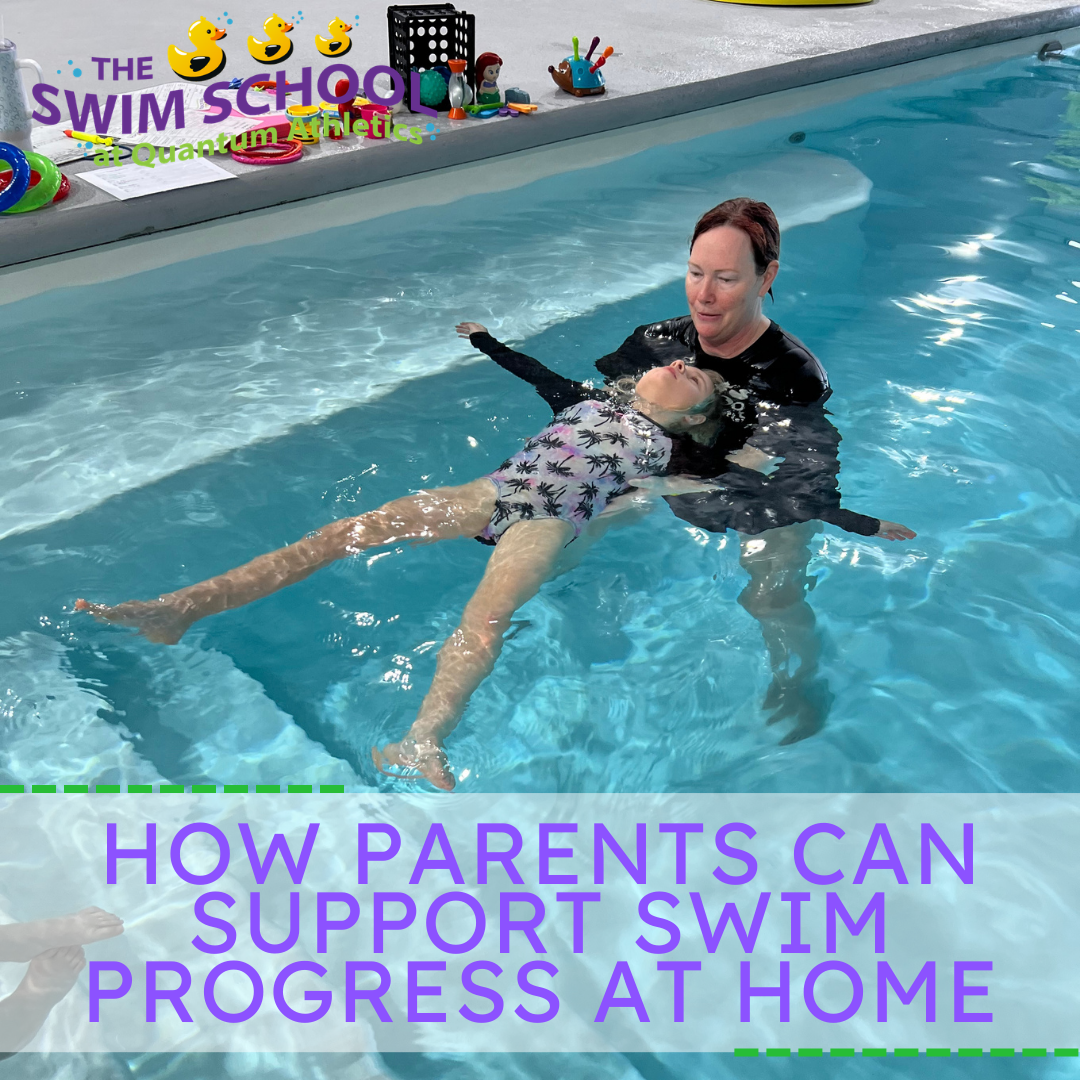
How Parents Can Support Swim Progress at Home
Swim lessons are powerful — but progress doesn’t only happen during those 30 minutes in the pool.
What happens at home matters too.
The good news? Supporting your child’s swim journey doesn’t require a pool in your backyard or advanced swim knowledge. Small, consistent encouragement outside of lessons can make a big difference in confidence and skill development.
Here’s how you can help.
1. Talk Positively About Swim Lessons
Children pick up on energy quickly. If swim lessons are framed as exciting, important, and something to look forward to, they’re more likely to approach them with confidence.
Try:
-
Asking, “What did you practice today?”
-
Celebrating small wins (“You put your whole face in? That’s awesome!”)
-
Avoiding pressure-based language
Progress in swimming builds step by step. Positive reinforcement keeps motivation high.
2. Practice Breath Control in the Bathtub
You don’t need a pool to practice foundational skills.
In the bathtub, kids can:
-
Blow bubbles in the water
-
Practice putting their chin, lips, or nose in
-
Slowly work toward full face submersion
Breath control is one of the biggest building blocks in swimming — and it can absolutely be reinforced at home.
3. Encourage Patience With the Process
Swimming is a complex skill. It requires coordination, strength, breath control, and confidence — all at the same time.
Some weeks you’ll see huge progress. Other weeks may feel slower.
That’s normal.
Avoid comparing your child to others. Every swimmer develops at their own pace. Consistency matters more than speed.
4. Reinforce Water Safety Conversations
Even outside the pool, you can strengthen safety awareness.
Have simple conversations about:
-
Always asking before going near water
-
Waiting for an adult
-
Walking instead of running near pools
The more these expectations are discussed at home, the more automatic they become.
5. Trust the Skill-Building Process
It can be tempting to “test” skills during open swim time — especially if you’re excited to see progress.
Instead of pushing for performance, focus on:
-
Encouraging effort
-
Letting instructors guide advancement
-
Supporting gradual independence
Confidence grows when children feel safe, not pressured.
6. Stay Consistent
The biggest factor in swim progress?
Consistency.
Regular attendance helps build:
-
Muscle memory
-
Endurance
-
Comfort in the water
-
Strong safety habits
Long breaks often mean rebuilding skills. Ongoing exposure keeps progress moving forward.
The Bottom Line
You don’t need to be a swim instructor to help your child succeed in lessons.
Your encouragement, patience, and positive attitude play a huge role in their confidence and growth.
When swim lessons and home support work together, children build not just stronger strokes — but stronger belief in themselves.
And that’s where real progress begins. 💙
