
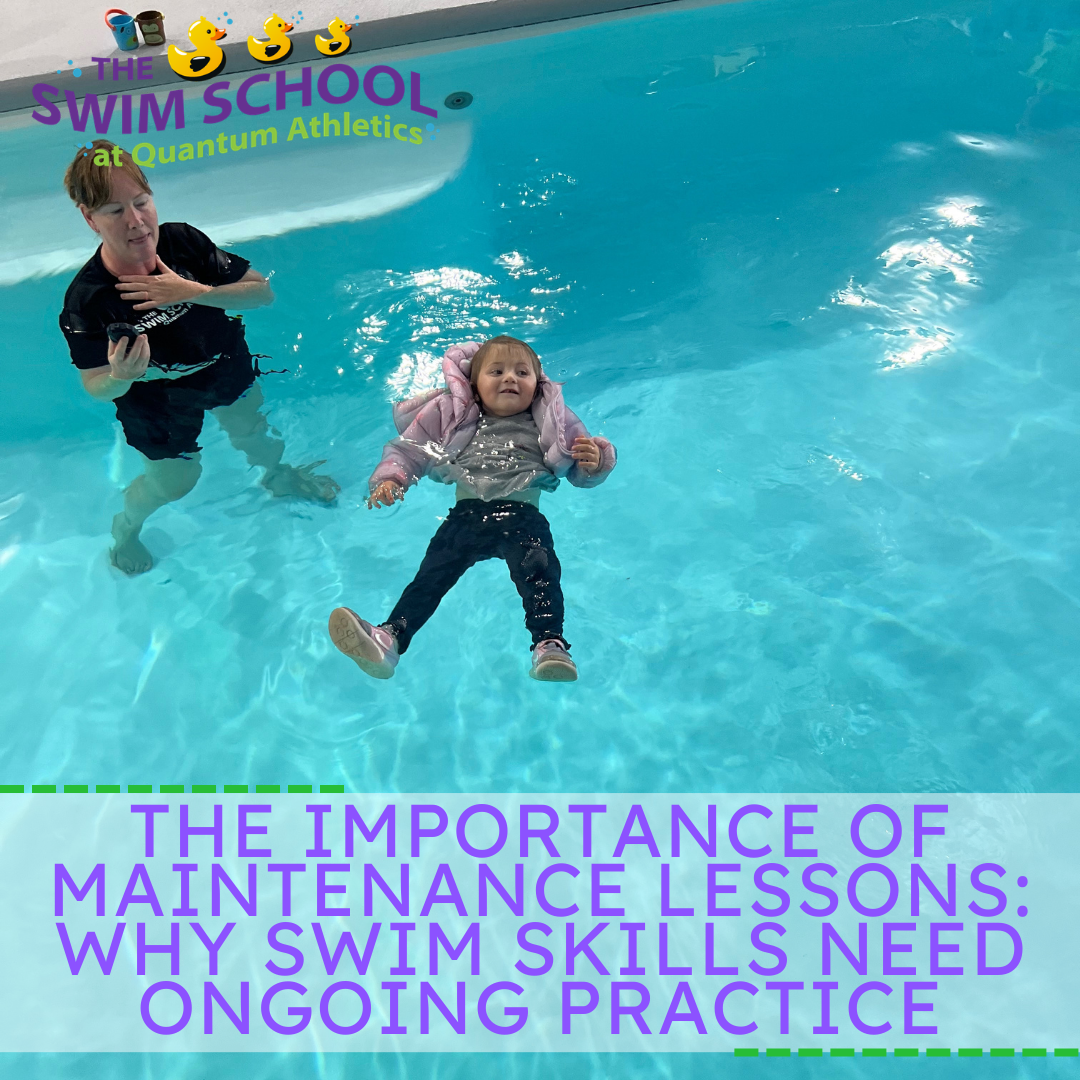
The Importance of Maintenance Lessons: Why Swim Skills Need Ongoing Practice
When a child completes a swim level or finishes their Survival Swim Session, it’s a huge accomplishment. They’ve worked hard, built confidence, and achieved important milestones in the water. But one question we often hear from families is:
“Now that my child can float, do they still need lessons?”
The short answer? Yes — if you want those skills to stay strong.
Just like reading, math, or playing a sport, swimming is a skill that needs consistent practice. Without it, even strong swimmers can lose confidence, technique, and endurance over time.
Let’s talk about why maintenance lessons matter.
1. Swim Skills Fade Without Practice
Swimming is a physical and technical skill. Coordination, breath control, floating, and stroke technique all rely on muscle memory and repetition.
If a child takes several months off:
-
Endurance decreases
-
Stroke technique becomes sloppy
-
Confidence may drop
-
Safety skills weaken
We often see swimmers return after a long break feeling frustrated because skills that once felt easy now feel difficult. Maintenance lessons help prevent that backslide.
2. Confidence in the Water Is Built Through Consistency
Confidence doesn’t come from just knowing how to swim — it comes from feeling comfortable in many different water situations.
Ongoing lessons:
-
Reinforce water safety habits
-
Build comfort in deeper water
-
Strengthen independent swimming skills
-
Reduce fear after growth spurts or time away
Children grow quickly. A child who felt strong in the water last summer may feel different after a growth spurt. Maintenance lessons help them adapt and stay confident.
3. Safety Skills Should Always Stay Sharp
Water safety is not a “one and done” lesson.
Regular practice helps swimmers:
-
Maintain proper breath control
-
Strengthen treading water skills
-
Improve floating and recovery techniques
-
Practice safe entries and exits
In emergency situations, skills need to be automatic. Maintenance lessons keep those responses strong and reliable.
4. Technique Matters — Especially as Kids Grow
As children get taller and stronger, their stroke mechanics change. Maintenance lessons allow instructors to:
-
Refine freestyle and backstroke technique
-
Introduce stronger side breathing
-
Improve body position and efficiency
-
Build endurance safely
This not only makes swimming easier — it prevents bad habits from forming.
5. Swimming Is a Life Skill, Not Just a Season
Many families treat swim lessons as something to complete and check off the list. But swimming is different from many other activities — it’s a lifelong safety skill.
Maintenance lessons help:
-
Keep swimming a regular part of your child’s routine
-
Encourage a healthy, active lifestyle
-
Prepare children for swim team or recreational swimming
-
Build lifelong water confidence
What Do Maintenance Lessons Look Like?
Maintenance lessons aren’t about repeating the same level over and over. They focus on:
-
Skill reinforcement
-
Endurance building
-
Stroke refinement
-
Safety review
-
Confidence strengthening
Think of it as keeping your child’s swim skills polished and strong — just like continuing piano lessons or sports practice.
The Bottom Line
Learning to swim is a milestone.
Maintaining swim skills is a commitment to safety and confidence.
Consistent practice ensures that when your child jumps into the pool — whether it’s next month or next summer — their skills are still strong, automatic, and reliable.
If you’re unsure whether your swimmer is ready for a break or would benefit from maintenance lessons, our instructors are always happy to help guide you.
Because when it comes to water safety, confidence matters — and consistency makes the difference.
