
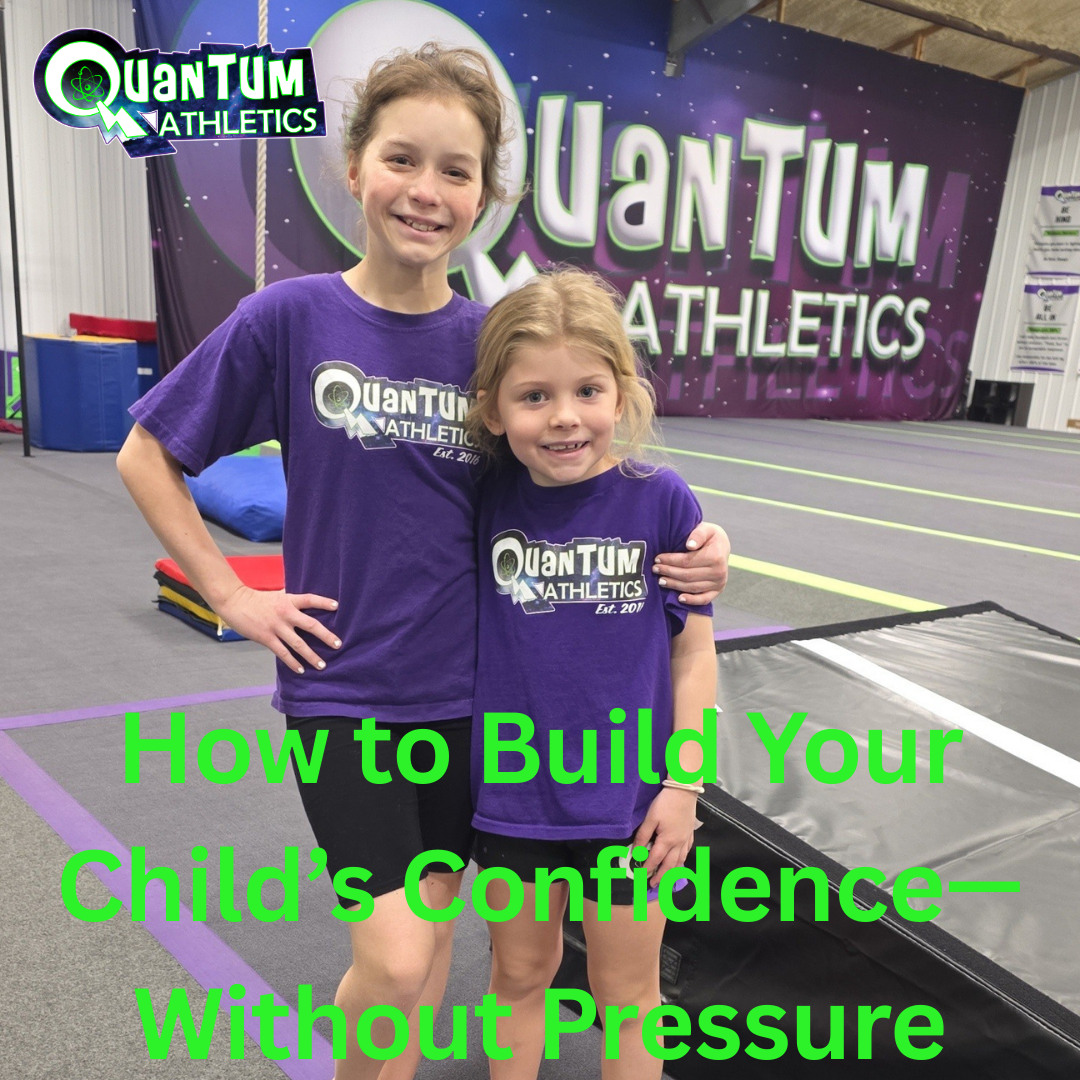
How to Build Your Child’s Confidence—Without Pressure
Every parent wants their child to be confident.
We want them to walk into new situations believing in themselves, willing to try, and resilient when things feel hard. But in the process of wanting the best for our kids, pressure can quietly sneak in—often disguised as encouragement.
At Quantum Athletics, we believe confidence isn’t created by pushing harder or expecting perfection. It’s built through trust, patience, and opportunities to grow at a child’s own pace.
Confidence vs. Pressure: Why the Difference Matters
Confidence sounds like:
-
“I can try.”
-
“I can learn.”
-
“I don’t have to be perfect to belong.”
Pressure sounds like:
-
“I can’t mess up.”
-
“I have to be the best.”
-
“People are watching.”
While pressure focuses on outcomes and performance, confidence grows when children feel safe to explore, fail, and try again. True confidence isn’t loud or showy—it’s steady, internal, and long-lasting.
Let Them Try—Even When It’s Hard to Watch
One of the most powerful ways to build confidence is also one of the hardest: letting kids try things on their own.
This might mean:
-
Allowing them to struggle through learning a new skill
-
Letting them solve a small problem independently
-
Giving them time instead of stepping in right away
Struggle is not failure—it’s where learning happens.
Helpful phrases adults can use:
-
“I’m here if you need help.”
-
“Take your time.”
-
“What do you want to try next?”
When children know support is available—but not forced—they learn to trust themselves.
Praise Effort, Not Results
Praise is important, but how we praise matters.
When kids are praised only for results (“You’re the best!” or “You’re so talented!”), they may begin to fear making mistakes. Instead, praising effort, focus, and persistence teaches kids that growth matters more than perfection.
Try phrases like:
-
“You worked really hard on that.”
-
“I noticed you didn’t give up.”
-
“You tried something new—that took courage.”
This kind of feedback builds confidence that lasts beyond one win or one good day.
Normalize Mistakes and Big Feelings
Confident kids aren’t kids who never fail—they’re kids who know failure is okay.
Mistakes are information. They help children learn what to adjust next time. When adults stay calm and supportive during tough moments, kids learn that mistakes don’t define them.
Big feelings matter too. Instead of fixing emotions right away, try acknowledging them:
-
“That was frustrating.”
-
“It’s okay to feel disappointed.”
-
“I can see you’re upset—and I’m here.”
A regulated, calm adult nervous system helps children feel safe—and safety is the foundation of confidence.
Create Environments Where Kids Feel Safe to Be Themselves
Confidence thrives in environments with:
-
Clear expectations
-
Consistent routines
-
Encouragement instead of constant correction
At Quantum Athletics, we focus on creating spaces where kids feel supported, challenged, and accepted. Coaches and instructors act as guides—not judges—helping kids build skills while trusting the process.
When children feel safe being themselves, they’re more willing to take healthy risks and grow.
Confidence Takes Time—And That’s Okay
Confidence doesn’t show up overnight. It’s built slowly, through repetition, encouragement, and experience.
Some children show confidence quietly. Others need more time. Both are okay.
There is no single timeline—and no comparison needed.
Less Pressure. More Trust.
When we ease pressure and shift our focus to effort, learning, and growth, confidence has room to develop naturally.
Trust the process.
Trust your child.
And remember—confidence grows best when kids feel supported, not evaluated.
At Quantum Athletics, we’re proud to be part of that journey.
